

Give Push to your Success with Kubernetes Administrator CKA Exam Questions
CKA 100% Guarantee Download CKA Exam PDF Q&A
The CKA program is designed for IT professionals who are interested in Kubernetes administration, including system administrators, DevOps engineers, and cloud administrators. Certified Kubernetes Administrator (CKA) Program Exam certification program covers a wide range of topics, including Kubernetes architecture and components, deploying applications on Kubernetes, configuring Kubernetes networking and security, and troubleshooting Kubernetes clusters.
NEW QUESTION # 50
Schedule a pod as follows:
Name: nginx-kusc00101
Image: nginx
Node selector: disk=ssd
Answer:
Explanation:
See the solution below.
Explanation
solution
F:\Work\Data Entry Work\Data Entry\20200827\CKA\6 B.JPG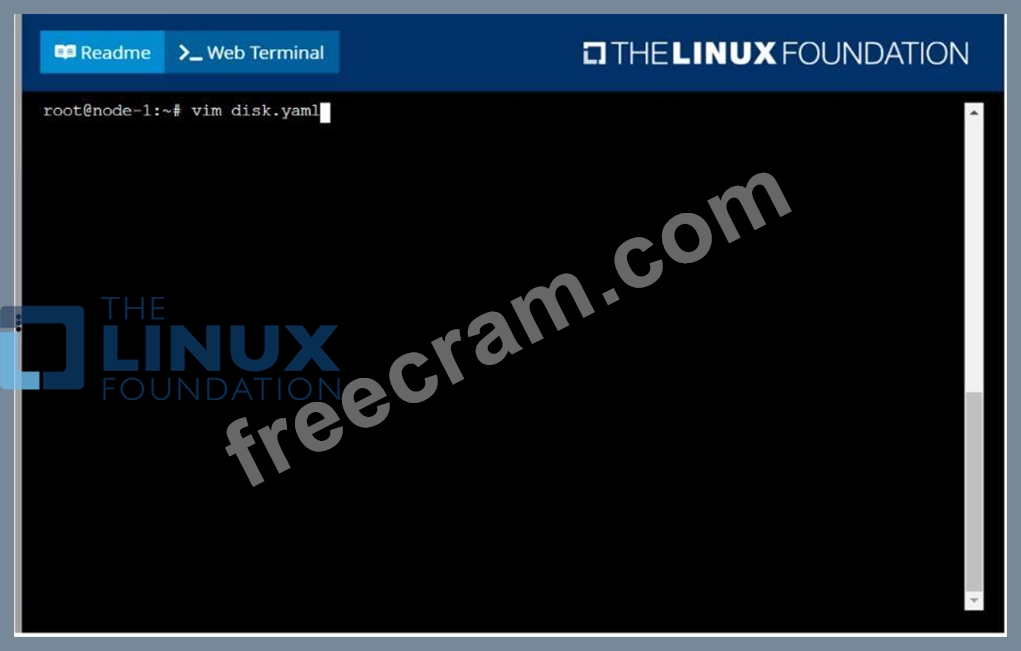
F:\Work\Data Entry Work\Data Entry\20200827\CKA\6 C.JPG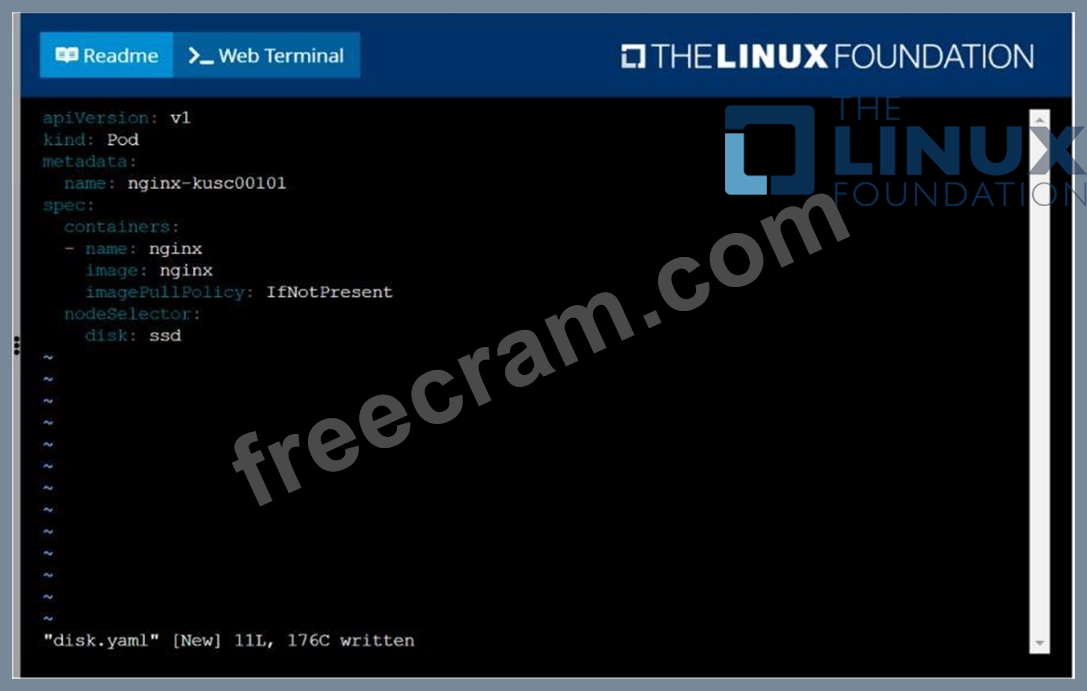
F:\Work\Data Entry Work\Data Entry\20200827\CKA\6 D.JPG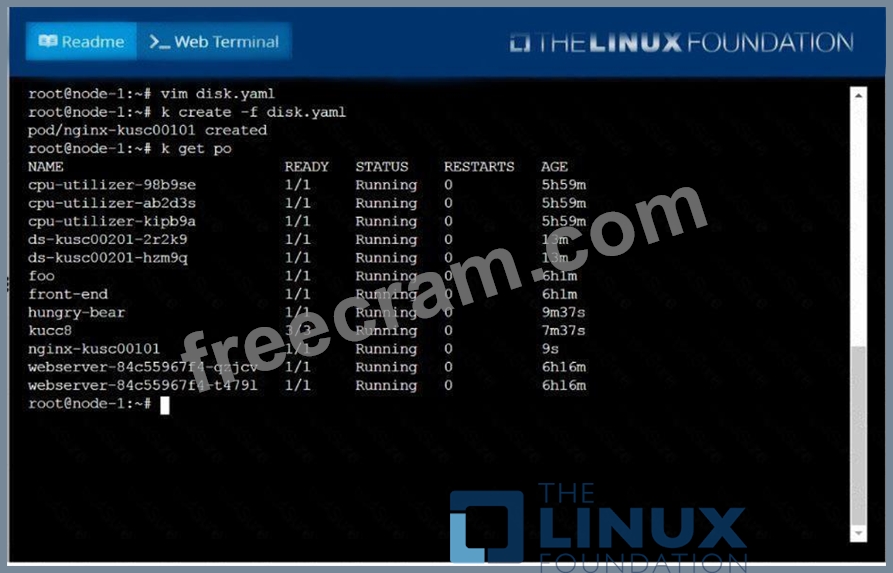
NEW QUESTION # 51
Given a partially-functioning Kubernetes cluster, identify symptoms of failure on the cluster.
Determine the node, the failing service, and take actions to bring up the failed service and restore the health of the cluster. Ensure that any changes are made permanently.
You can ssh to the relevant I nodes (bk8s-master-0 or bk8s-node-0) using:
[student@node-1] $ ssh <nodename>
You can assume elevated privileges on any node in the cluster with the following command:
[student@nodename] $ | sudo -i
Answer:
Explanation: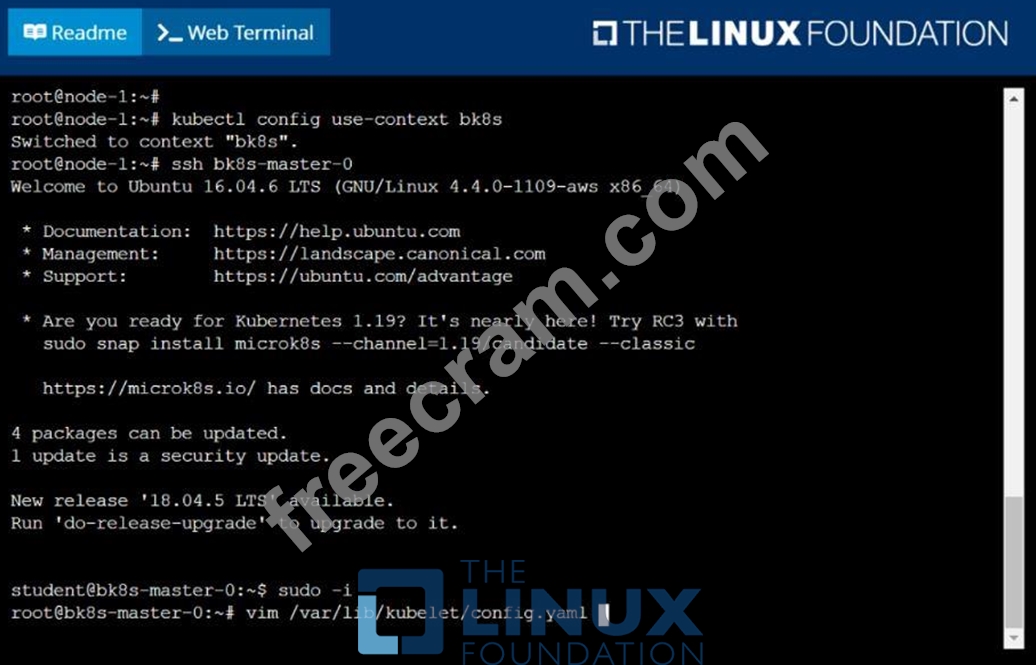
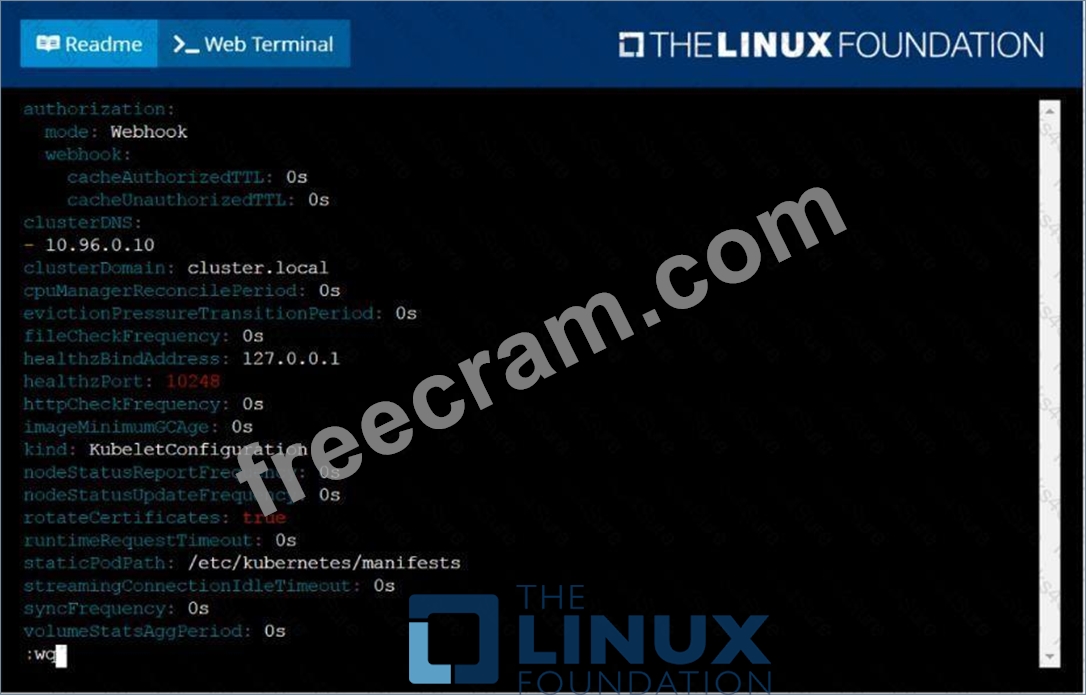
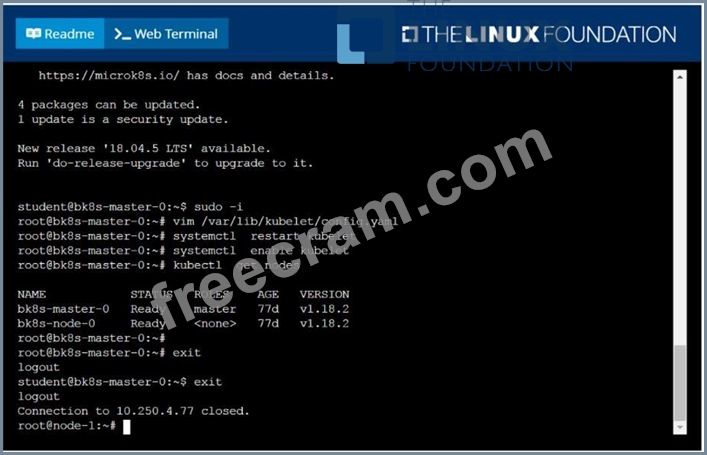
NEW QUESTION # 52
You have a Deployment running a web application with three replicas. The application is exposed using a 'NodePort' service. You need to configure the service so that it allows traffic only from specific IP addresses (e.g., 192.168.1.10, 192.168.1.20).
Answer:
Explanation:
See the solution below with Step by Step Explanation.
Explanation:
Solution (Step by Step) :
1. Create a NetworkPolicy:
- Define a NetworkPolicy resource that allows traffic from the specified IP addresses to the Deployment pods.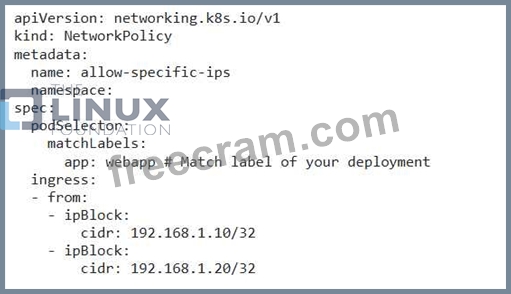
2. Apply the NetworkPolicy: - Apply the YAML file using 'kubectl apply -f networkpolicy.yaml'. 3. Verify the NetworkPolicy: - Check the status of the NetworkPolicy using 'kubectl get networkpolicies allow-specific-ips -n 4. Test the Access: - Attempt to access the web application from the allowed IP addresses. You should be able to access it. - Try to access the application from other IP addresses. You should not be able to access it. Note: Replace " with the actual namespace where your Deployment and NetworkPolicy are located.
NEW QUESTION # 53
Delete persistent volume and persistent volume claim
Answer:
Explanation:
kubectl delete pvc task-pv-claim kubectl delete pv task-pv-volume // Verify Kubectl get pv,pvc
NEW QUESTION # 54
Create a pod with image nginx called nginx and allow traffic on port 80
Answer:
Explanation:
kubectl run nginx --image=nginx --restart=Never --port=80
NEW QUESTION # 55
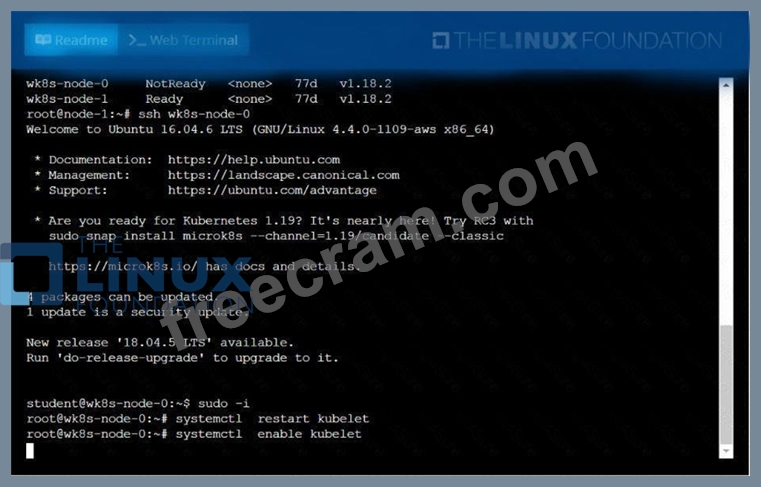
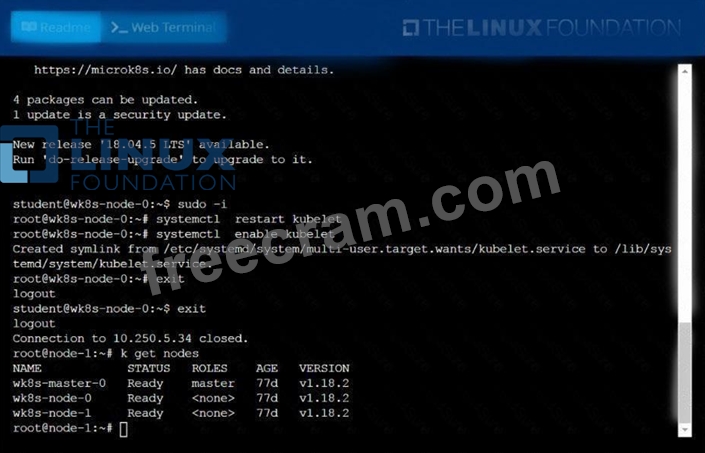
A Kubernetes worker node, named .Investigate why this is the case,
andperform any appropriate steps tobring the node to a state,ensuring that any changes are madepermanent.
You cansshto the failednode using:
[student@node-1] $ | sshWk8s-node-0
You can assume elevatedprivileges on the node with thefollowing command:
[student@w8ks-node-0] $ |sudo -i
Answer:
Explanation:
See the solution below.
Explanation
solution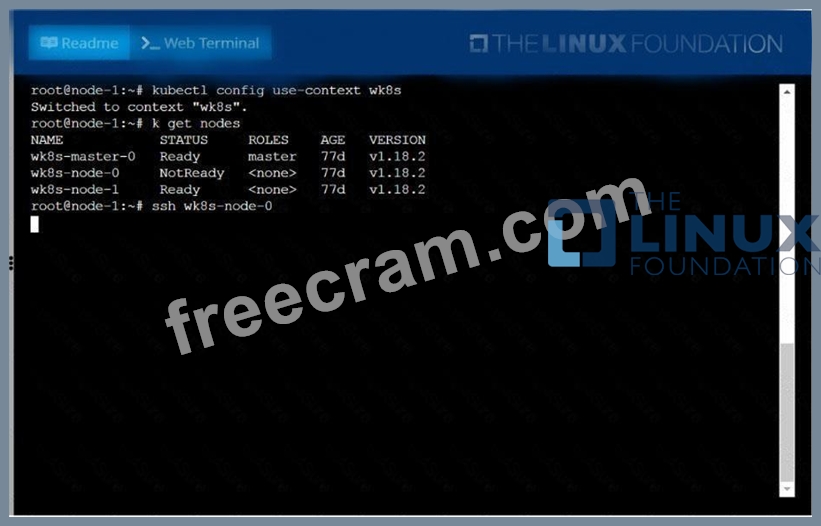
NEW QUESTION # 56
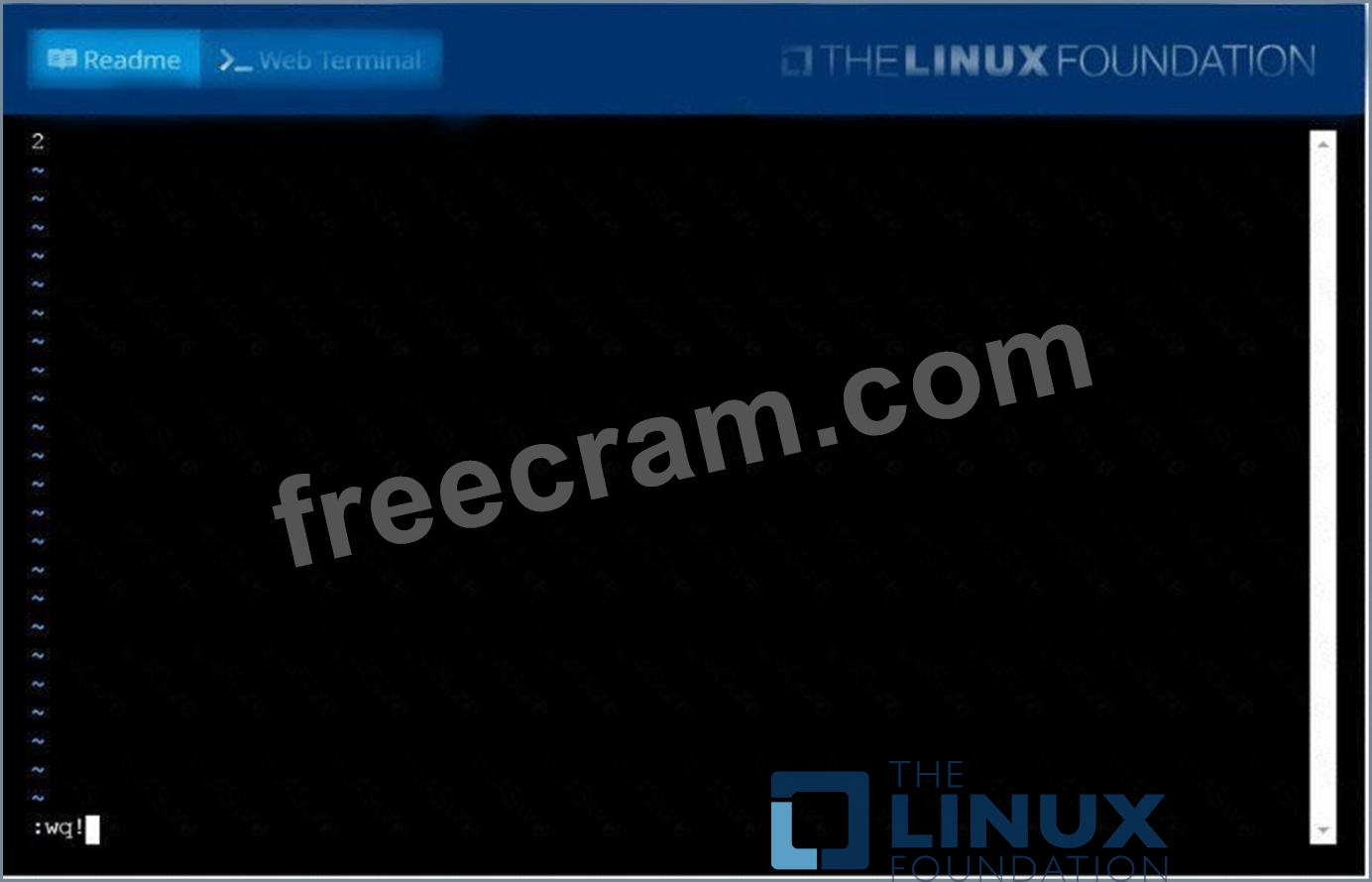
Check to see how many worker nodes are ready (not including nodes tainted NoSchedule) and write the number to /opt/KUCC00104/kucc00104.txt.
Answer:
Explanation:
See the solution below.
Explanation
solution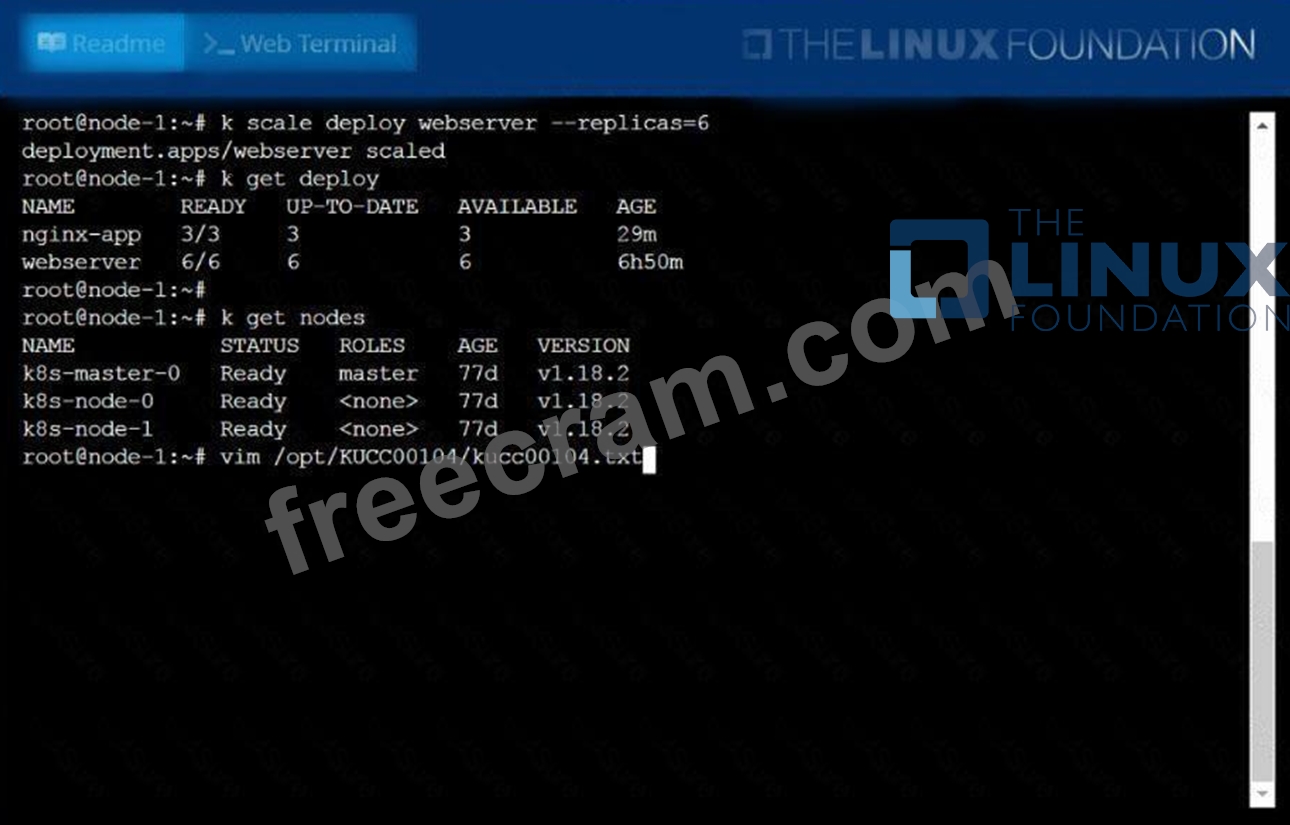
NEW QUESTION # 57
Check the Image version of nginx-dev pod using jsonpath
Answer:
Explanation:
kubect1 get po nginx-dev -o jsonpath='{.spec.containers[].image}{"\n"}'
NEW QUESTION # 58
Scale the deployment from 5 replicas to 20 replicas and verify
Answer:
Explanation:
kubectl scale deploy webapp --replicas=20 kubectl get deploy webapp kubectl get po -l app=webapp
NEW QUESTION # 59
List all the pods sorted by name
Answer:
Explanation:
See the solution below.
Explanation
kubectl get pods --sort-by=.metadata.name
NEW QUESTION # 60
Score: 4%
Task
Create a pod named kucc8 with a single app container for each of the following images running inside (there may be between 1 and 4 images specified): nginx + redis + memcached .
Answer:
Explanation:
Solution:
kubectl run kucc8 --image=nginx --dry-run -o yaml > kucc8.yaml
# vi kucc8.yaml
apiVersion: v1
kind: Pod
metadata:
creationTimestamp: null
name: kucc8
spec:
containers:
- image: nginx
name: nginx
- image: redis
name: redis
- image: memcached
name: memcached
- image: consul
name: consul
#
kubectl create -f kucc8.yaml
#12.07
NEW QUESTION # 61
An Administrator is configuring Authentication Enforcement and they would like to create an exemption rule to exempt a specific group from authentication. Which authentication enforcement object should they select?
- A. default-no-captive-port
- B. default-web-form
- C. default-authentication-bypass
- D. default-browser-challenge
Answer: A
NEW QUESTION # 62
Your Kubernetes cluster is experiencing slow deployments, and you suspect that the image pull process is causing the bottleneck. You need to investigate the image pull performance and optimize it to speed up deployments.
Answer:
Explanation:
See the solution below with Step by Step Explanation.
Explanation:
Solution (Step by Step) :
1. Identify the Slow Deployments:
- Monitor the deployment progress for recent deployments using 'kubectl rollout status deployment '
- Identify the deployments that are experiencing slow image pulls.
2. Examine Deployment Logs:
- Check the deployment logs for messages related to image pulling.
- You can view logs using 'kubectl logs -f.
- Look for messages like "Pulling image" and "Image pull timed out" to identify pods that are experiencing slow image pulls.
3. Check Image Registry Connectivity:
- Verify that the pods can connect to the image registry:
- Run 'kubectl exec -it -n bash' to enter a pod in the deployment.
- Use 'ping to check network connectivity to the image registry.
- If connectivity is an issue, resolve any network problems between the pods and the image registry.
4. Verify Image Registry Credentials:
- Ensure the pods have the correct credentials to access the image registry.
- Check if the credentials are stored in a secret and mounted into the pod's service account.
- If necessary, create a new secret with the correct credentials for the image registry.
5. Optimize Image Pull Policy:
- Set the 'imagePullPolicy' to 'Always' in the deployment YAML:
- This ensures that the pods always pull the latest image from the registry, avoiding potential caching issues.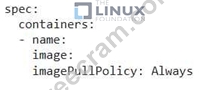
7. Optimize Network Bandwidth: - Ensure sufficient network bandwidth is available for image pulls: - Check the network connection between the nodes and the image registry. - Consider using a dedicated network connection for image pulls if possible. 8. Use Image Caching: - Enable image caching on the nodes to reduce image pull times: - Many container registries offer image caching features. - Configure the image cache to store frequently used images locally on the nodes. 9. Monitor Deployment Performance: - After making changes to the deployment configuration, monitor the performance of deployments: - Check the deployment logs and use 'kubectl rollout status deployment to verify that deployments are completing faster. 10. Consider Alternative Approaches: - If the image pull performance remains slow, consider these alternative approaches: - Pre-pull images: Download the required images to a local image repository before deployment. - Use image-based deployments: Deploy container images directly instead of using a deployment. - Employ a dedicated image puller: Use a separate container or service to handle image pulls.,
NEW QUESTION # 63
Monitor the logs of pod foo and:
Extract log lines corresponding
unable-to-access-website
Write them to/opt/KULM00201/foo
Answer:
Explanation:
See the solution below.
Explanation
solution
F:\Work\Data Entry Work\Data Entry\20200827\CKA\1 B.JPG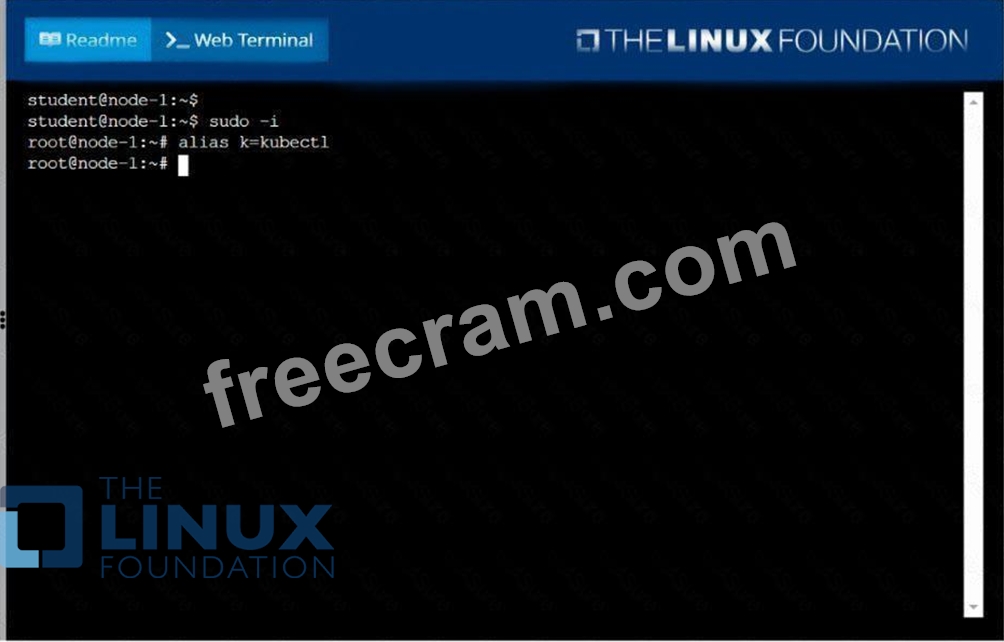
F:\Work\Data Entry Work\Data Entry\20200827\CKA\1 C.JPG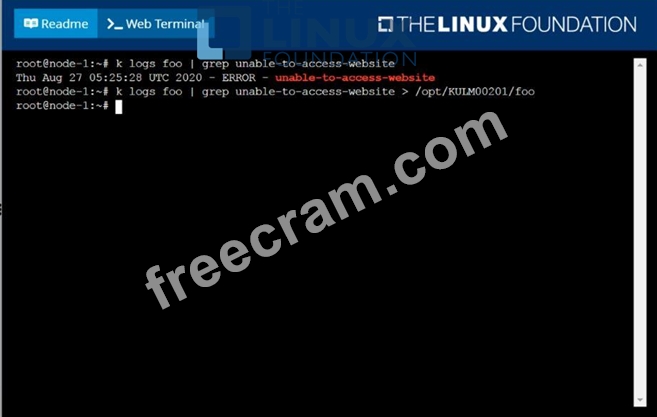
NEW QUESTION # 64
Print pod name and start time to "/opt/pod-status" file
Answer:
Explanation:
kubect1 get pods -o=jsonpath='{range .items[*]}{.metadata.name}{"\t"}{.status.podIP}{"\n"}{end}'
NEW QUESTION # 65
Score: 4%
Task
Scale the deployment presentation
Answer:
Explanation:
See the solution below.
Explanation
Solution:
kubectl get deployment
kubectl scale deployment.apps/presentation --replicas=6
NEW QUESTION # 66
Create an nginx pod and list the pod with different levels of verbosity
Answer:
Explanation:
// create a pod
kubectl run nginx --image=nginx --restart=Never --port=80
// List the pod with different verbosity
kubectl get po nginx --v=7
kubectl get po nginx --v=8
kubectl get po nginx --v=9
NEW QUESTION # 67
You are deploying a service in Kubernetes that needs to access a database service running in a different namespace. How can you configure NetworkPolicy to allow communication between these services across namespaces?
Answer:
Explanation:
See the solution below with Step by Step Explanation.
Explanation:
Solution (Step by Step) :
1 . Create a NetworkPolicy in the service's namespace:
- Create a NetworkPolicy in the namespace of the service that needs to access the database.
- Code: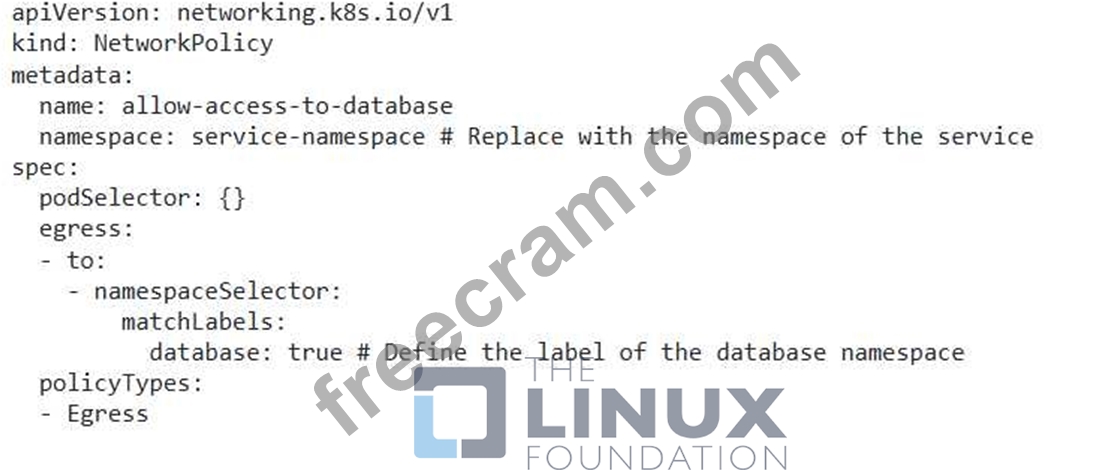
2. Ensure the Database Namespace has the Correct Label: - Ensure that the namespace where the database service is running has the label 'database: true'. 3. Apply the NetworkPolicy: - Apply the NetworkPolicy using 'kubectl apply -f networkpolicy.yaml'.
NEW QUESTION # 68
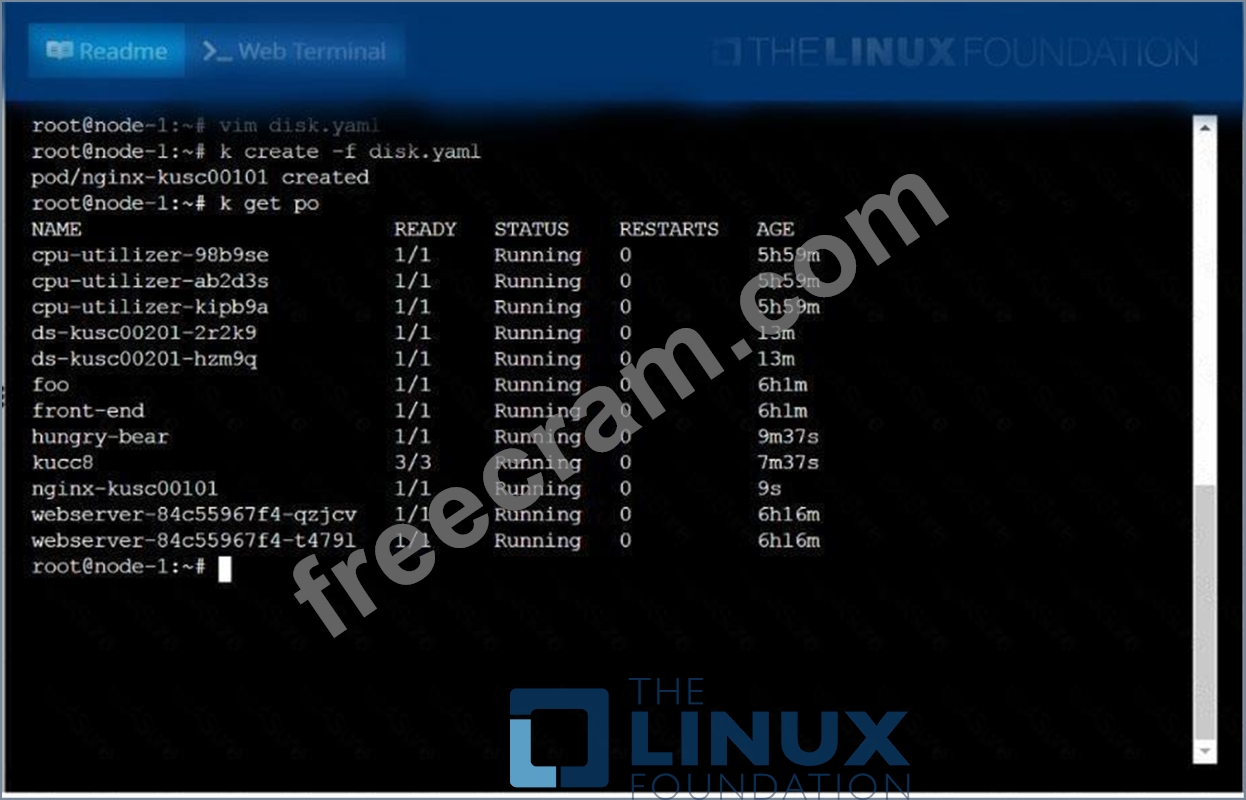
Schedule a pod as follows:
* Name: nginx-kusc00101
* Image: nginx
* Node selector: disk=ssd
Answer:
Explanation:
See the solution below.
Explanation
solution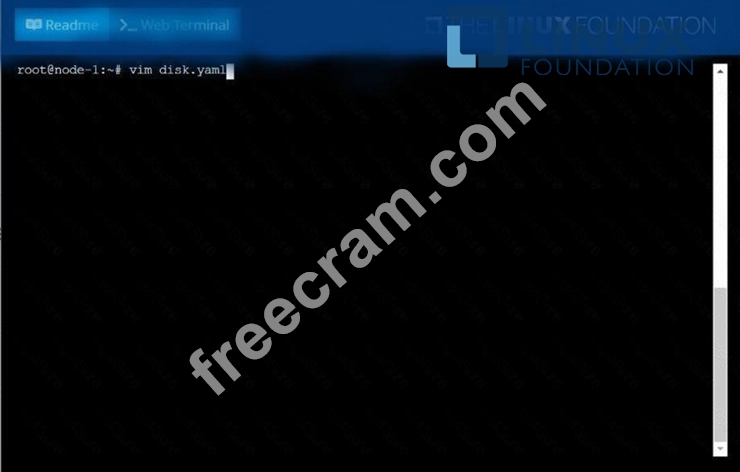
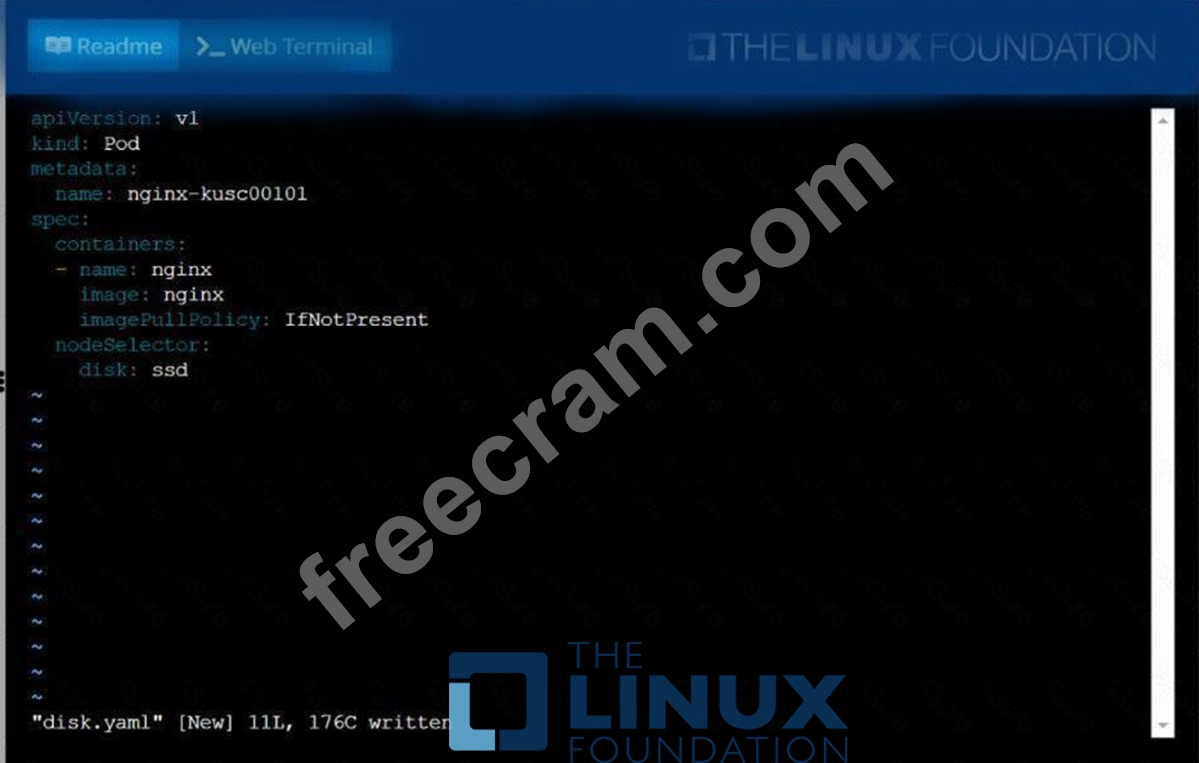
NEW QUESTION # 69
Create a Pod nginx and specify both CPU, memory requests and limits together and verify.
- A. kubectl run nginx-request --image=nginx --restart=Always --dryrun -o yaml > nginx-request.yml
// add the resources section and create
apiVersion: v1
kind: Pod
metadata:
labels:
run: nginx
name: nginx
resources:
requests:
memory: "100Mi"
cpu: "0.4"
limits:
memory: "200Mi"
cpu: "7"
restartPolicy: Always
k kubectl apply -f nginx-request.yaml
// Verify
Kubectl top po - B. kubectl run nginx-request --image=nginx --restart=Always --dryrun -o yaml > nginx-request.yml
// add the resources section and create
apiVersion: v1
kind: Pod
metadata:
labels:
run: nginx
name: nginx-request
spec:
containers:
- image: nginx
name: nginx
resources:
requests:
memory: "100Mi"
cpu: "0.5"
limits:
memory: "200Mi"
cpu: "1"
restartPolicy: Always
k kubectl apply -f nginx-request.yaml
// Verify
Kubectl top po
Answer: B
NEW QUESTION # 70
......
The Need for CNCF CKA Certification Exam
The CNCF Certified Kubernetes Administrator exam is designed to test the knowledge of candidates on deploying, managing, and troubleshooting applications on Kubernetes clusters. Answers to the CNCF Certified Kubernetes Administrator exam questions can be found in the official study guide. Real world experience and hands-on configuration and troubleshooting is critical to passing any certification exam. Real world experience will put candidates in good stead for the CNCF Certified Kubernetes Administrator exam. Download the study guide and start studying for the exam. CNCF CKA exam dumps can be accessed from certain test providers. The CNCF CKA exam dumps will provide the candidate with the knowledge to pass the exam. Application of knowledge from the study guide to real life configuration will help candidates pass the CNCF Certified Kubernetes Administrator exam. Updates on the official definition of each question will be available on the Brightwork website. Understanding questions on Kubernetes in the CNCF Certified Kubernetes Administrator exam is subject to change. Understanding real-world configuration and troubleshooting is central to passing the CNCF Certified Kubernetes Administrator exam.
How can you enhance your CNCF CKA Certification Exam skills?
In order to become a Certified Kubernetes Administrator, you have to have the skills required to be able to jump in and help out in an emergency. You can always do more by taking CNCF CKA exam dumps. Dumps allow you to take the exam and pass it in the shortest amount of time possible. Lifecycle is the life of a container. The lifecycle in Kubernetes includes build, deploy, run, and delete. CNCF CKA Certification Exam is being delivered with the help of online tools. Administrators are responsible for managing, operating, and running containers. Mock exams will help IT professionals get ready for the CNCF CKA Certification Exam. All the necessary resources will be provided on the CNCF Certified Kubernetes Administrator exam website. Based on your experience and previous exam history, you will be able to choose a right platform. Documentation contents will be available on the website.
New products and products that are about to come out will help IT professionals gain knowledge. Configuration files will be used by Kubernetes for various purposes. Personal development will be based on the evaluation of performance. When taking a test, you can either be given a high score or a low score. Real time feedback will help students get better at the CNCF CKA Certification Exam. The tester will use their experience to decide what areas need to be worked on. Access to real time statistics will help students know how they are doing. The guarantee will help students get the resources that they need in order to give them the best opportunity to pass their exams. Top universities will be used to provide you with the CNCF CKA Certification Exam.
Get CKA Actual Free Exam Q&As to Prepare Certification: https://www.freecram.com/Linux-Foundation-certification/CKA-exam-dumps.html
Linux Foundation Actual Free Exam Questions And Answers: https://drive.google.com/open?id=1m5BiCY6f8dX7skUwkueI7JYI3pzfQ-9_